Balloon animal designs can be a handheld companion carried around a party or a sculptural feature that helps define the whole setting. Those two roles call for different decisions. A guest who wants to take home a duck has different needs from an organiser commissioning a cluster of sea creatures for a photo corner. Instead of choosing only by animal name, look at how the finished piece will be held, photographed and enjoyed. Our examples show the range between compact designs, handheld characters and more elaborate display work.
Start with how the guest will hold the design
A small duck or dog gives guests a character they can present beside their face for a portrait. A handheld animal can be raised, turned toward the camera or shown to a friend. Its grip and balance matter as much as its expression. Before choosing a design, imagine the next part of the event. Will guests be sitting down to eat, visiting other activities or posing for a photograph?
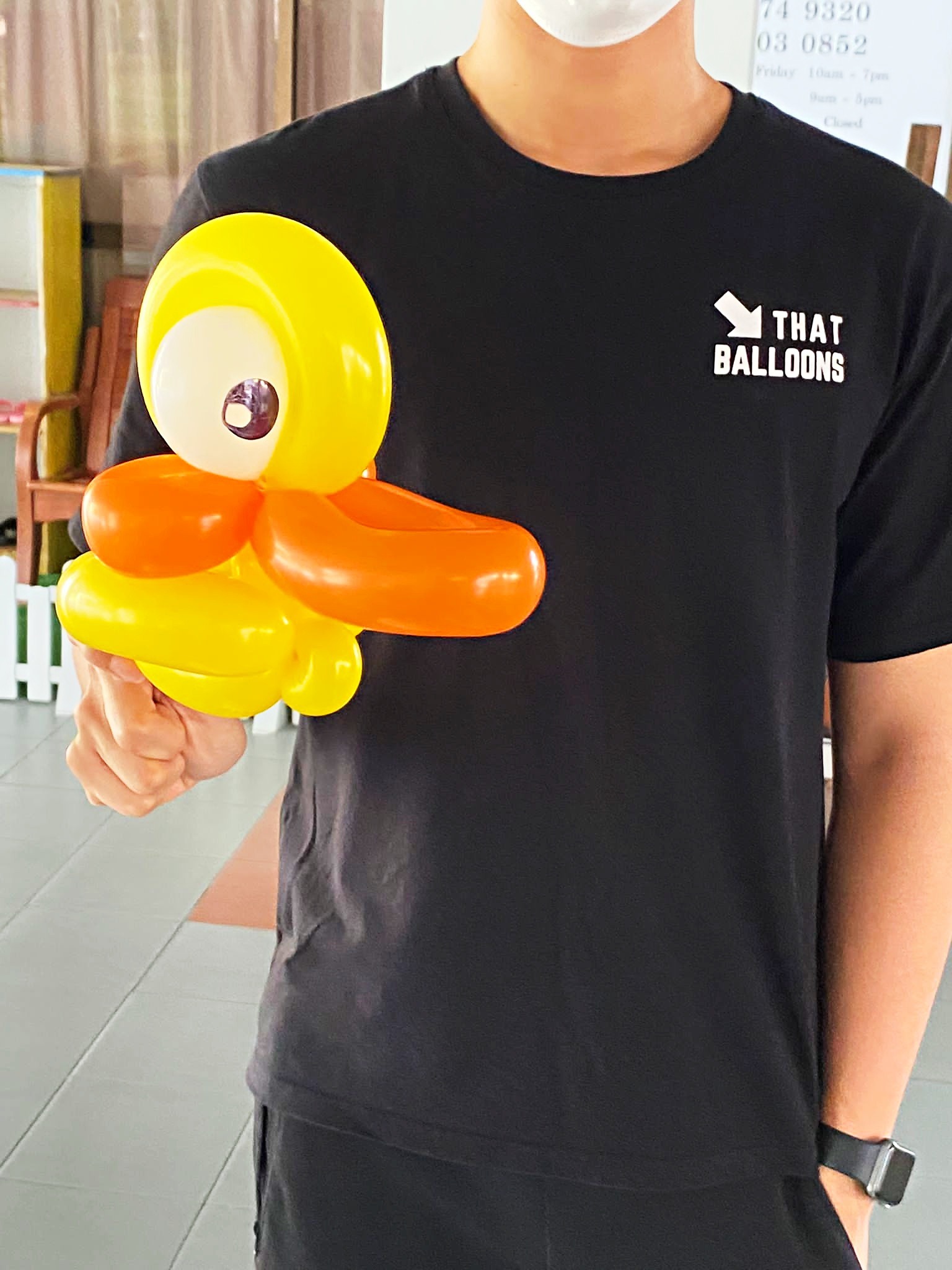
The yellow duck shown here demonstrates the compact handheld approach. Its broad orange bill and large eye give it a recognisable silhouette without needing a large body. This is a design reference rather than a guarantee of a particular size or production time. Discuss the actual design menu with the artist, including which choices are suitable for the intended audience and event format.

A recognisable face can matter more than realism
Balloon animals often work through a few strong features. An elephant needs a clear trunk and generous ears; a giraffe can be suggested by a long neck and a playful muzzle. Enlarged eyes and a simple expression make a character readable even when it uses unexpected colours. A pink giraffe does not have to imitate a real animal to make a cheerful event photograph.
Think about which detail makes your chosen animal recognisable. If the brief asks for too many small features, the main shape may become less clear. Bring a reference that shows the overall pose and expression you like. The artist can then explain what translates well into balloons and whether the result belongs in a handheld menu or a separately prepared sculpture.

Build a small world with balloon animal designs
An animal-themed entrance offers a useful example of designing a collection rather than ordering unrelated characters. Pandas and giraffes can share a green base while keeping distinct silhouettes. A rainbow can connect the two sides visually. The entrance photograph shows how individual creatures can become part of a larger scene, while the freestanding yellow giraffe demonstrates a single animal used as a display feature.
Do not assume an elaborate display animal can be produced as quickly as a simple giveaway. Display work and live twisting are different formats, even when they use similar materials. If the scene is the main attraction, discuss large balloon sculptures separately from the activity guests watch during the event. This helps the creative brief describe the right deliverable.

Separate the display collection from take-home choices
A sculptural scene can contain delicate connections or details that are designed to be viewed in place. A take-home piece needs a comfortable way to carry it. Keeping these roles clear prevents guests from assuming that every animal in the display is part of the giveaway selection. Show the available live choices using examples that match what the artist will actually make.
For an animal party, the display might feature a tall giraffe, while simpler handheld dogs form the guest activity. For an animal-themed family event, a larger feature can introduce the theme and a compact selection can offer personal choice. These are planning examples, not fixed packages. Ask the team to recommend a combination that suits your event and the designs you prefer.

Use colour to connect the animals to the celebration
Colour can bring very different characters into one collection. You might choose a repeated accent for eyes, feet or decorative details, then vary the main body colour. This gives guests variety while keeping the photographs visually related. The animal does not need to be a literal brand colour from head to tail if that makes the shape harder to read.
Take a close look at the examples before deciding. The purple and yellow dogs, pink unicorn and colourful lion head each use colour differently. Some rely on contrast between the face and body; others use a single strong colour for immediate recognition. A clear palette is useful, but allow the artist to suggest changes that improve the finished form rather than enforcing a colour combination that hides its features.

Make the photograph part of the design decision
A character that looks charming on a table may cover a child’s face when held up. For portraits, consider a piece that can sit beside the shoulder or be held below the chin. The photographs in this collection show guests naturally presenting their animals in different ways. They are useful references for deciding how large or visually dominant a piece should be.
If photographs are a major part of the celebration, keep the background simple enough for the balloon shape to stand out. A busy animal display can be wonderful as a feature, but a smaller handheld design benefits from clear space around it. You can explore a coordinated balloon backdrop wall if the event needs a dedicated portrait setting as well as live sculpting.

Choose a live demonstration or a learning activity
Watching an artist transform long balloons into a recognisable creature is a different experience from making a design yourself. For guests who mainly want to watch and receive a finished piece, balloon sculpting is the relevant starting point. The design menu can be discussed around the audience and the kind of interaction you want. For examples of a performance-led format, Big Top’s balloon sculpting service describes strolling and staged artist interactions.
If the aim is participation and learning, consider a balloon sculpting workshop. A workshop should use a suitable teaching design rather than promising that beginners will reproduce every complex example shown here. Choose the activity format first, then let that choice guide the level of detail and the number of designs introduced.
Send a brief that describes the role of each animal
A useful enquiry identifies the event theme, preferred animals and whether each piece is intended for carrying, displaying or learning. Include a few references from the gallery and explain which features you like. Saying that you love the expression of the duck or the long neck of the giraffe is more helpful than requesting an exact copy without discussing how it will be used.
The strongest balloon animal designs have a clear purpose as well as personality. Start with that purpose, agree the visual direction with the team and distinguish live creations from separately prepared display work. The result can give guests an enjoyable interaction while making the animal theme visible in the photographs they keep.
Handheld characters and animal display examples


